
The ideal lawn mowing schedule Tupelo homeowners should follow involves weekly cuts during the peak growing season from late spring through summer. You should reduce this frequency to every ten to fourteen days as temperatures drop in the fall; eventually, you can stop altogether once the grass enters its winter dormant phase.
Maintaining a pristine lawn in Tupelo often feels like a losing battle against the relentless Mississippi humidity and aggressive growth cycles. Homeowners frequently struggle with overgrown patches or scorched turf because they rely on a generic schedule rather than a localized strategy. At BADDBOYY ENTERPRISES LLC, we understand that professional results demand precise timing. A properly calibrated mowing cycle does more than improve curb appeal; it protects the root system and ensures long term resilience against the elements. This guide provides a comprehensive breakdown of the ideal mowing frequency for North Mississippi, covering everything from the spring surge to critical summer heat adjustments. We will examine the one third rule as it applies to Bermuda, Zoysia, and Fescue, while outlining the necessary steps for winter dormancy. Mastering these cycles is the definitive way to elevate a standard yard into a premium landscape.
Understanding the Growing Season in North Mississippi
Tupelo sits in a unique geographic position, falling within USDA Plant Hardiness Zones 7b and 8a. This location brings long, humid summers and mild springs that create a demanding environment for turfgrass. Because of these specific conditions, the lawn mowing schedule Tupelo residents must maintain is dictated by local temperature shifts and high moisture levels rather than a static calendar. Understanding the timing of these biological shifts is the first step toward a healthy yard.
The transition from dormant winter grass to active spring growth in Lee County typically occurs in late March or early April. As soil temperatures consistently reach the 55 to 60 degree range, the root systems of warm-season grasses begin to stir. If you are planning for professional lawn care services, this period marks the critical start of the maintenance year. It is during these weeks that the lawn shifts from a brown, protective state to a vibrant green, requiring an immediate adjustment in how frequently the turf is cut.
Most properties in our area are dominated by warm-season varieties like Bermuda, Zoysia, or Centipede grass, which thrive in the Mississippi heat. However, it is common to see occasional cool-season patches, such as Fescue, tucked into heavily shaded areas where the sun cannot reach. These shaded zones require a different approach to landscape maintenance in Tupelo because they do not share the heat tolerance of the surrounding lawn. Balancing the needs of these two distinct grass types is essential for maintaining uniform curb appeal throughout the growing season.
Spring Mowing: Managing the Rapid Growth Surge
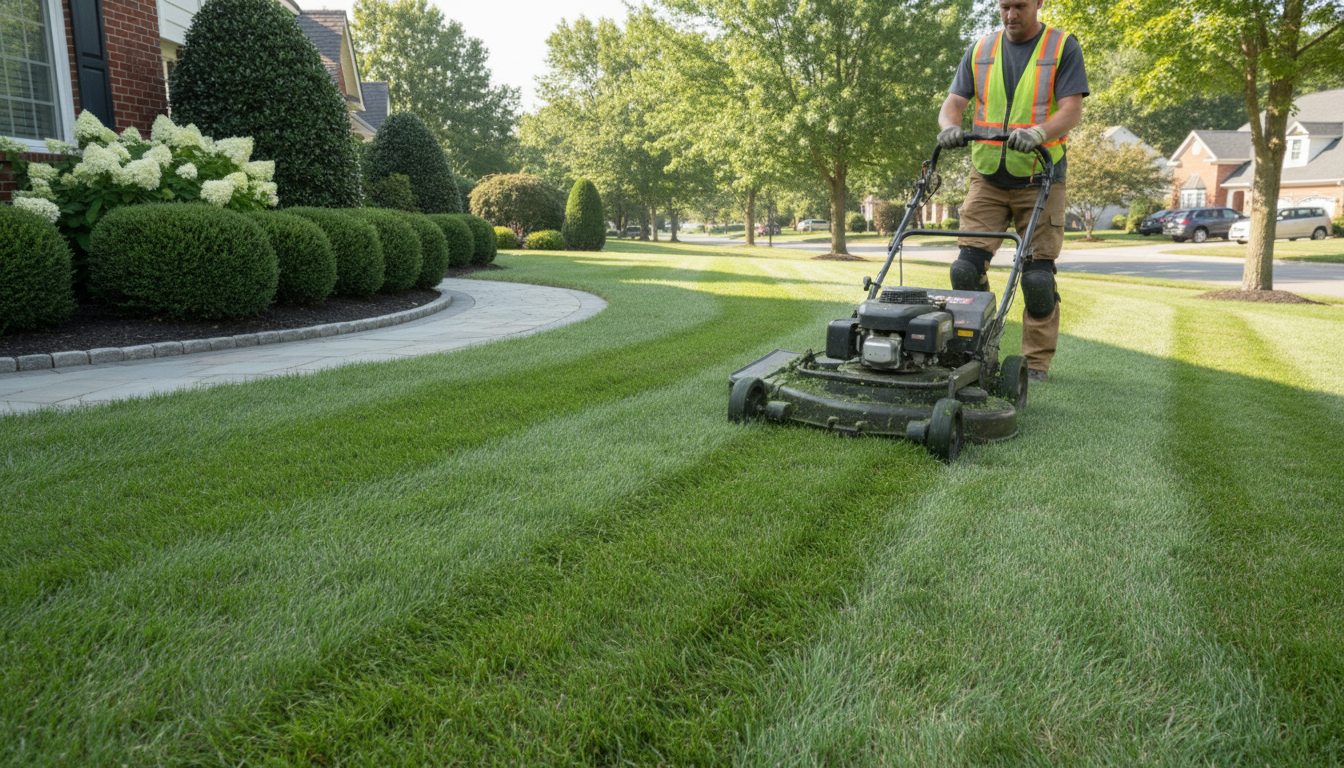
Once the soil warms and those first green shoots appear, the workload intensifies rapidly. April and May are the most demanding months for any lawn mowing schedule Tupelo residents manage because the grass enters its primary growth surge. The combination of consistent spring rains and climbing temperatures creates a greenhouse effect for North Mississippi turf. During this peak window, growth can be so aggressive that a weekly cut is the bare minimum requirement.
For the healthiest results, we recommend a frequency of every 5 to 7 days during these two months. If you wait ten days or two weeks to mow in May, you will likely be forced to scalp the lawn to bring it back to a manageable height. Scalping is a significant stressor that shears off the protective leaf canopy, exposing the soil directly to sunlight. This sunlight exposure triggers the germination of dormant weed seeds, specifically crabgrass, which can quickly choke out your desirable grass.
Strategic height adjustments are also vital during the initial spring push. For the very first cut of the season, set your mower blades slightly lower than your usual summer height. This tactical clean up mow removes the lingering, dead winter blades that can trap moisture and encourage disease. Clearing this debris allows sunlight and oxygen to reach the crown of the plant, fueling a faster green-up. Maintaining this discipline early in the year simplifies your landscape maintenance in Tupelo as the season progresses. If the growth becomes overwhelming, utilizing professional lawn care services ensures the grass is cut at the precise height and frequency needed to prevent weed encroachment.
The Summer Mowing Schedule: Adjusting for Heat and Humidity
As Mississippi enters the peak months of June, July, and August, the focus of your maintenance routine shifts from managing rapid growth to mitigating heat stress. The combination of high humidity and afternoon temperatures frequently exceeding 90 degrees puts immense pressure on the turf. Even with professional lawn care services in place, the intense summer sun requires a tactical adjustment to ensure the grass does not become scorched or stunted.
For yards equipped with consistent irrigation, the lawn mowing schedule Tupelo homeowners follow should generally remain on a weekly basis. When grass receives regular water, its metabolic processes remain active, and it will continue to reach its target height every seven days despite the heat. However, for non-irrigated lawns, the approach must be more flexible. During a dry spell, grass often enters a semi-dormant state to conserve energy and moisture. In these instances, you should always check the actual height of the blades before starting the mower. If the grass has not grown significantly, skipping a scheduled cut is the best way to prevent unnecessary trauma to the plant.
One of the most effective strategies for landscape maintenance in Tupelo during mid-summer is raising the mower deck. Starting in July, we recommend increasing your cutting height by at least half an inch. This additional leaf length provides a critical canopy that shades the soil surface. By keeping the soil shaded, you lower the ground temperature and reduce the rate of moisture evaporation. This prevents the root system from baking in the Lee County heat and allows the lawn to retain its color even when the thermometer spikes. Taller grass also develops deeper roots, which are essential for accessing moisture deep in the soil profile during the hottest weeks of the year.
Why the One Third Rule Matters for Tupelo Lawns
Adhering to a strict lawn mowing schedule Tupelo residents can rely on involves more than just regular maintenance. It requires following the one-third rule, which states you should never remove more than one-third of the total grass height during a single visit. This is not just an aesthetic guideline; it is a biological necessity for healthy turf. When you shear off too much of the blade, you drastically reduce the plant's ability to undergo photosynthesis. This forces the grass to divert energy from root development toward urgent leaf repair, resulting in shallow roots that cannot withstand a typical Mississippi dry spell.
Maintaining deep roots is vital for successful landscape maintenance in Tupelo. If a week of heavy rain disrupts your routine and the grass grows beyond its manageable height, the solution is not to drop the mower deck and hack it down to your standard target immediately. Doing so causes physiological shock and leaves the remaining stems vulnerable to disease. Instead, adjust your professional lawn care services strategy by performing two separate, smaller cuts spaced three or four days apart. This gradual reduction allows the grass to acclimate to a lower height without sacrificing the health of the root system, ensuring the lawn remains resilient against the local humidity and heat.
Mowing Frequency by Grass Type: Bermuda, Zoysia, and Fescue

Tailoring your lawn mowing schedule Tupelo depends heavily on the specific cultivar growing in your yard. Bermuda grass is the most common variety we service in Lee County, prized for its ability to withstand foot traffic and heat. Because Bermuda is a fast-growing, aggressive turf, it thrives on frequent, low cuts. For a standard lawn, maintaining a height of 1 to 1.5 inches is ideal. If you desire a high-end, golf course appearance, you may need to mow twice a week during June and July to prevent the stems from becoming leggy and woody.
Zoysia grass offers a different growth habit. It is denser and grows more slowly than Bermuda, making it a favorite for homeowners who want a premium look with slightly less maintenance. A height of 2 inches generally keeps Zoysia healthy and lush. For these properties, a strict weekly schedule usually suffices to stay within the one-third rule. This consistency helps the turf maintain its carpet-like texture without the rapid vertical growth seen in other warm-season varieties.
If your property features shaded areas with Fescue, your approach must change entirely. As a cool-season grass, Fescue struggles in the Mississippi humidity. It requires a much taller canopy, at least 3 inches or more, to protect the crown of the plant. During the peak heat of the summer, reduce the mowing frequency for Fescue significantly. Mowing tall Fescue too often or too short when temperatures exceed 90 degrees can cause the turf to thin out or die completely. Our professional lawn care services team often adjusts deck heights mid-route to account for these specific micro-climates within a single property, ensuring each grass type receives the specialized care it requires for successful landscape maintenance in Tupelo.
Fall Tapering and Preparing for Winter Dormancy
As September arrives in North Mississippi, the intense humidity begins to break and overnight temperatures drop. This cooling trend signals your Bermuda and Zoysia to begin the process of dormancy. During this transition through November, the lawn mowing schedule Tupelo homeowners maintain should gradually lengthen. Instead of the tight weekly interval required in July, you can usually shift to a cut every 10 to 14 days. This shift allows the grass to focus its remaining energy on root fortification rather than blade recovery as photosynthesis slows down.
The final mow of the year, typically occurring in late October or early November, is the most important part of late-season landscape maintenance in Tupelo. This is not just about aesthetics; it serves as a critical sanitation step. You must remove fallen leaves and organic debris that would otherwise form a wet, matted layer over the turf. Because our Mississippi winters are notoriously damp, leaving debris on the lawn creates a perfect breeding ground for mold and fungal diseases like Large Patch. Utilizing professional lawn care services for this final cleanup ensures your grass enters the winter stage clean and unobstructed, which prevents thinning and disease when the spring green-up returns in March.