
Effective fall lawn care Mississippi focuses on core aeration to improve soil health and applying the right fertilizer to strengthen warm season grasses before winter dormancy. Homeowners should also overseed thin patches and apply pre-emergent herbicides to prevent winter weeds while maintaining proper mowing heights for Bermuda grass.
As the sweltering Mississippi heat begins to fade, your Tupelo lawn enters a critical transition phase that determines its health for the entire next year. Many homeowners mistakenly believe that Bermuda grass dormancy is a period of total inactivity. In reality, neglect during this autumn window leads to a spring season dominated by invasive weeds and patchy, underperforming turf. At Baddboyy Enterprises LLC, we recognize that professional results require strategic foresight and precise execution. Preparing your grass for the winter months is not merely routine maintenance; it is an essential investment in your property's long term vitality. This guide provides expert insights into the specific timing for pre emergent applications and the science of winterizer fertilizers. We also detail how adjusting your mowing height and irrigation schedules can safeguard root health against the coming frost. Follow these sophisticated lawn care strategies to ensure your turf emerges with unmatched vigor.
Understanding Bermuda Grass Dormancy in Northeast Mississippi
Bermuda grass is a warm-season specialist that operates on a biological clock tied directly to the Mississippi climate. Unlike Fescue, which enters a peak growth phase during a Tupelo autumn, Bermuda begins a tactical retreat as daylight hours shorten. This transition to dormancy is a survival mechanism, not a sign of poor health. While cool-season grasses are busy pushing new blades, your Bermuda turf is shifting its focus underground, moving vital nutrients from the leaf tips down into the stolons and rhizomes for winter storage.
In Lee County, the first frost typically arrives between late October and mid-November. However, the lawn begins responding to soil temperatures long before the first frost hits the ground. When soil temperatures consistently dip below 65 degrees Fahrenheit, growth slows significantly; once they drop below 55 degrees, the grass enters full dormancy and loses its green color. Understanding this timing is essential for effective fall lawn care Mississippi. Misidentifying this shift as a lack of water or nutrients can lead to improper late-season applications that weaken the root system. Homeowners who want to ensure their turf is protected during this vulnerable transition often rely on professional lawn maintenance services to manage the timing of final treatments.
The Critical Window for Pre Emergent Weed Control

As the Bermuda grass enters its energy-storage phase, a different group of plants is preparing to emerge. Winter annuals like Poa annua (annual bluegrass), henbit, and chickweed are opportunistic; they wait for the lawn to thin and go dormant to take over. Successful fall lawn care Mississippi requires a proactive approach to stop these seeds before they sprout. Once you see the green clumps of Poa annua in February, the battle becomes significantly harder and more expensive to win.
The science of weed prevention in Tupelo hinges on soil temperature. While homeowners often wait for the air to feel crisp, the critical window for pre-emergent application is mid-September to early October. You must have the treatment down before soil temperatures drop below 70 degrees Fahrenheit, as this is the biological trigger for winter weed germination. If the herbicide is not present in the soil profile when the temperature hits this threshold, the seeds will establish themselves under the cover of your dormant Bermuda.
If you are wondering what to treat Bermuda grass with in the fall, look for professional-grade products containing Prodiamine or Dithiopyr. These options are highly effective for Mississippi soil types and provide a long-lasting barrier that prevents weed seedlings from successfully breaching the surface. Because the timing window is so narrow, many residents find that professional lawn maintenance services are the most reliable way to ensure the application hits the soil at the precise moment of maximum effectiveness. Following a year-round lawn care schedule for Tupelo ensures you do not miss this critical window, protecting your lawn's aesthetics for the coming spring.
Winterizer Fertilizers: Feeding Roots Instead of Foliage
The transition from weed prevention to nutrient management is vital for long-term turf resilience. While summer programs prioritize nitrogen to drive blade growth, effective fall lawn care Mississippi focuses on the root system through potassium-rich applications. Often referred to as a winterizer, this treatment shifts the plant's focus from the surface to the soil. Potassium strengthens cell walls and increases the concentration of solutes in the plant's sap; it essentially acts as an antifreeze that protects Bermuda grass crowns and stolons from North Mississippi’s sub-freezing temperatures.
Applying high-nitrogen fertilizers late in the year is a common mistake that can lead to disastrous results. Excess nitrogen encourages lush, succulent growth that is easily damaged by frost and provides a feast for fungal pathogens. Specifically, late-season nitrogen is a leading cause of Large Patch disease, a fungus that thrives in the cool, damp conditions of a Tupelo autumn. To ensure you are applying the correct ratio for your specific site, perform a soil test to account for the nutrient retention differences between local clay and loamy soil profiles. If you are unsure how to balance these requirements, contact BADDBOYY ENTERPRISES LLC to discuss a customized nutrient plan tailored to your lawn's specific needs.
Adjusting Your Mowing Height: Should You Cut Bermuda Short for Winter?
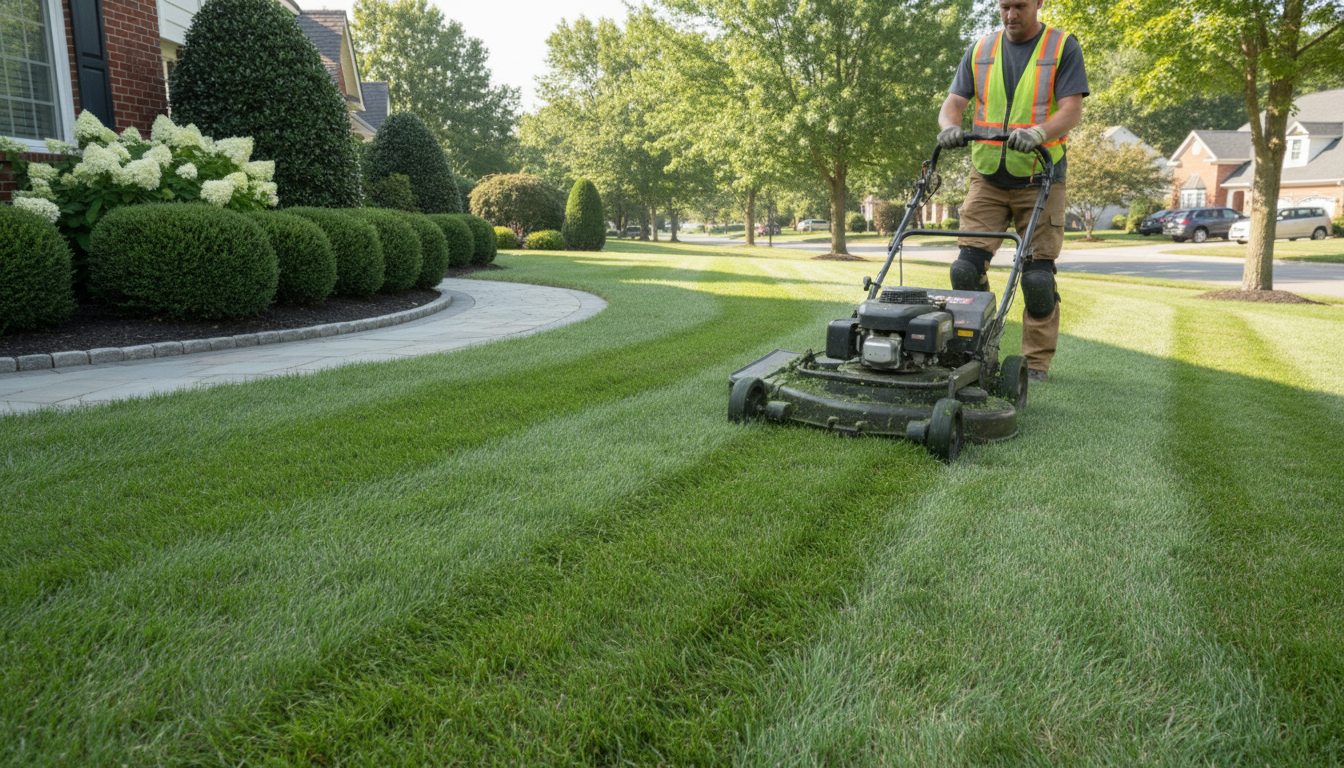
Proper nutrient management sets the foundation for a healthy lawn, but physical protection of the grass crown is equally important as you approach the final mow of the year. Many homeowners mistakenly believe that cutting Bermuda short in the fall helps with spring green-up, but scalping too late in the season is a primary cause of winter kill in Northeast Mississippi. When a sudden Tupelo cold snap hits, a lawn cut too low leaves the plant's growing point, or crown, exposed to freezing temperatures without any natural buffer.
For your final few mows, adjust your blades to maintain a height of 2 to 2.5 inches. This extra canopy acts as a critical insulation layer, trapping a pocket of slightly warmer air near the soil surface. As you transition to this height, stick to the 1/3 rule: never remove more than one third of the grass blade in a single cutting. Abruptly hacking the grass down late in the year induces unnecessary stress just as the plant is trying to conserve energy for dormancy. Keeping that extra half-inch of growth is a simple yet effective part of fall lawn care Mississippi that ensures your turf survives the erratic temperature swings typical of Lee County winters.
Managing Fall Leaves: Mulching vs Raking for Lawn Health
In Northeast Mississippi, managing leaf litter is a functional necessity for turf health. A thick carpet of oak or maple leaves creates an impenetrable barrier that blocks sunlight, preventing Bermuda grass from finishing its essential energy storage for dormancy. Furthermore, these leaves trap moisture against the soil surface, creating a humid microclimate where fungal diseases thrive.
To maintain proper fall lawn care Mississippi standards, you must decide between mulching and removal based on volume. If you can see at least 50 percent of the grass blades through the leaf cover, mulching with a commercial-grade mower is beneficial. The high-lift blades pulverize organic matter into small flakes that break down quickly, returning nutrients to the soil. However, once the leaf layer becomes deep enough to mat down and hide the turf completely, you must remove them. Heavy matting suffocates the grass crowns and can lead to winter kill. For large properties with heavy tree cover, utilizing professional lawn maintenance services ensures leaves are cleared before they compromise the lawn's health.
Aeration and Dethatching: Why Timing Matters in Mississippi
Generic national guides often emphasize fall aeration, but following that advice for Bermuda grass in Northeast Mississippi can be a costly mistake. For warm-season turf in Tupelo, core aeration is best reserved for late spring or early summer when the grass is actively growing and can quickly recover from the mechanical stress. Aerating a lawn as it enters dormancy leaves the root system exposed to the elements without the ability to self-repair, increasing the risk of winter kill. This local nuance is a key distinction in effective fall lawn care Mississippi.
However, you should evaluate your thatch layer as part of your seasonal maintenance. If more than half an inch of organic debris has accumulated between the blades and the soil surface, it acts as a sponge, catching your pre-emergent treatments before they can reach the ground. A light dethatching or power raking in late September can clear this barrier without damaging the grass crowns. If you are unsure if your lawn requires this step, contact BADDBOYY ENTERPRISES LLC for a professional assessment. Ensuring a clear path to the soil is vital for the effectiveness of your year-round lawn care schedule for Tupelo.
Irrigation Adjustments for the Tupelo Fall Season
Maintaining a clear path to the soil through dethatching is only effective if you follow up with a precise irrigation strategy. As Tupelo transitions from the sweltering humidity of August to the cooler, drier days of October, your watering habits must shift to reflect lower evaporation rates. Dormancy does not mean the plant is dead; the root system requires moisture to stay viable throughout the winter months. For proper fall lawn care Mississippi, the goal is to keep the soil moist but not saturated.
Hydrated soil acts as a thermal buffer, holding onto ground heat longer than dry, porous earth. This thermal mass protects the Bermuda crowns from desiccation and freeze damage during sudden Lee County cold fronts. If the local area experiences a dry autumn, switch to a schedule of deep, infrequent watering every 7 to 10 days. This provides enough moisture for the roots without leaving the canopy wet overnight. If you need help adjusting your controller for the season, contact BADDBOYY ENTERPRISES LLC to ensure your year-round lawn care schedule for Tupelo remains on track.
Your Tupelo Fall Lawn Care Checklist

Success with fall lawn care Mississippi relies on hitting specific biological windows before the Lee County frost arrives. Follow this timeline to ensure your Bermuda grass stays protected throughout the winter months:
September: Apply pre-emergent herbicides like Prodiamine before soil temperatures dip below 70 degrees. Gradually raise your mowing height to 2.5 inches to insulate the grass crowns.
October: Apply a potassium-rich winterizer fertilizer to strengthen root cell walls. Monitor leaf fall; mulch light layers or remove heavy accumulation to prevent moisture trap and fungal growth.
November: Complete your final mow of the season. Before winter storage, sharpen mower blades to ensure a clean cut that does not fray dormant grass, then thoroughly clean the mower deck to remove corrosive debris.
If your schedule is too packed to manage these critical windows, contact BADDBOYY ENTERPRISES LLC for assistance. Integrating these tasks into a year-round lawn care schedule for Tupelo prevents costly spring weed outbreaks and ensures a healthy green-up next year.